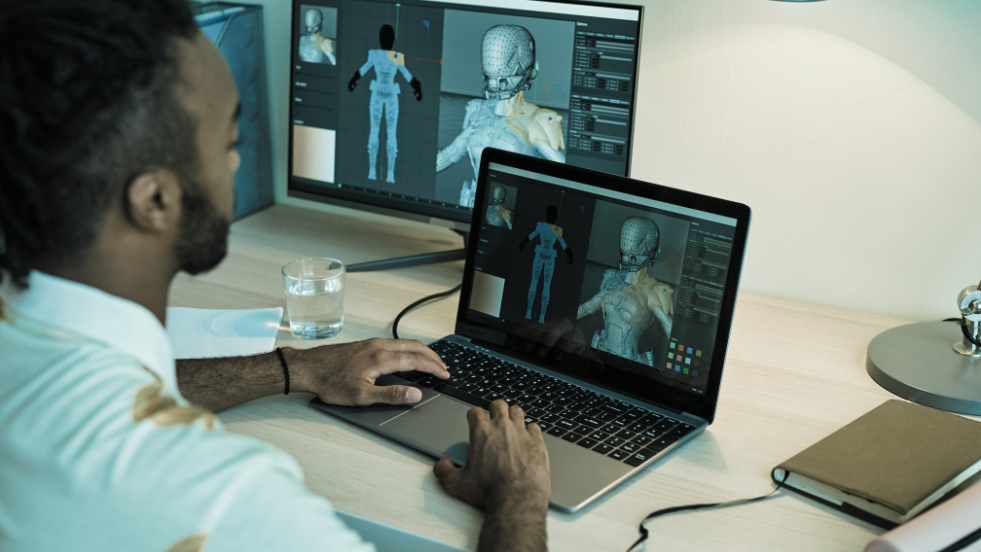


Every year, industrial companies invest heavily in safety training content that workers watch once, forget quickly, and rarely revisit.
This is because most safety videos rely on generic footage, scripted delivery, and environments that do not reflect real operations. They check compliance boxes but fail to drive retention or behaviour change.
In high-risk industries, poor training has real consequences. An undertrained worker puts themselves, their team, and the organisation at risk. Safety is not an area where “good enough” works.
This is why plants need to invest in safety video animation.
The Problem With Live Action Industrial Safety Videos
Live action safety video production has a fundamental set of limitations that most EHS and training managers have learned to live with — but don’t have to.
They go out of date. Machinery changes. Processes get updated. Regulations evolve. A live action industrial safety video shot in 2022 showing a specific machine, a specific PPE setup, and a specific workflow may be partially incorrect by 2024 — but reshooting it means another production day, another crew, and another budget line.
They cannot show what cannot be filmed. The most important safety information is often invisible to the naked eye — pressure building inside a valve, chemical reactions at the molecular level, the structural failure sequence of a load-bearing component under stress. Live action cannot show any of this. Safety video animation can show all of it, in as much detail as the training requires.
They struggle with scale. A manufacturing company with plants in Pune, Chennai, and Gujarat cannot cost-effectively produce site-specific live action safety content for each location. An animated industrial safety video, once produced, can be localised, subtitled, dubbed, and adapted far more efficiently than any live shoot.
They are easy to ignore. Workers who have watched the same live action safety induction video three years in a row have learned to be physically present without being mentally engaged. Animation — particularly when it is well-produced, visually dynamic, and scenario-driven — commands attention in a way that a familiar talking head simply does not.
What Safety Video Animation Does Differently
A well-produced safety animation does not just replace a live video. It does things a live video structurally cannot.
It visualises hazards that are invisible in real life. Electrical current. Toxic gas dispersion. The internal mechanics of equipment failure. A safety video animation can show exactly what happens inside a machine when a lockout/tagout procedure is skipped — not as a diagram, but as a three-dimensional, real-time visualisation that makes the consequence of non-compliance viscerally clear.
It shows consequences without showing harm. One of the most effective elements of industrial safety training is consequence awareness — understanding what actually happens when something goes wrong. Live video cannot show a real industrial accident. Animation can show a realistic, accurate simulation of what failure looks like, without putting anyone at risk and without graphic content that could cause distress or legal issues.
It standardises training across sites and languages. An animated industrial safety video produced once can be dubbed into Hindi, Marathi, Tamil, or any other language required — with no reshoot, no new cast, and no loss of visual quality. For pan-India manufacturing operations, this is not a minor convenience. It is a significant operational advantage.
It holds attention longer. Animation is not passive. When the visual style is clean, the pacing is tight, and the scenario feels relevant to the viewer’s actual role — workers watch. Completion rates for animated safety training content consistently outperform live action equivalents, particularly on mobile devices, which is increasingly how frontline workers consume training content.
Types of Industrial Safety Videos That Work Best in Animation
Not every safety training scenario benefits equally from animation. These are the formats where safety video animation delivers the most measurable impact:
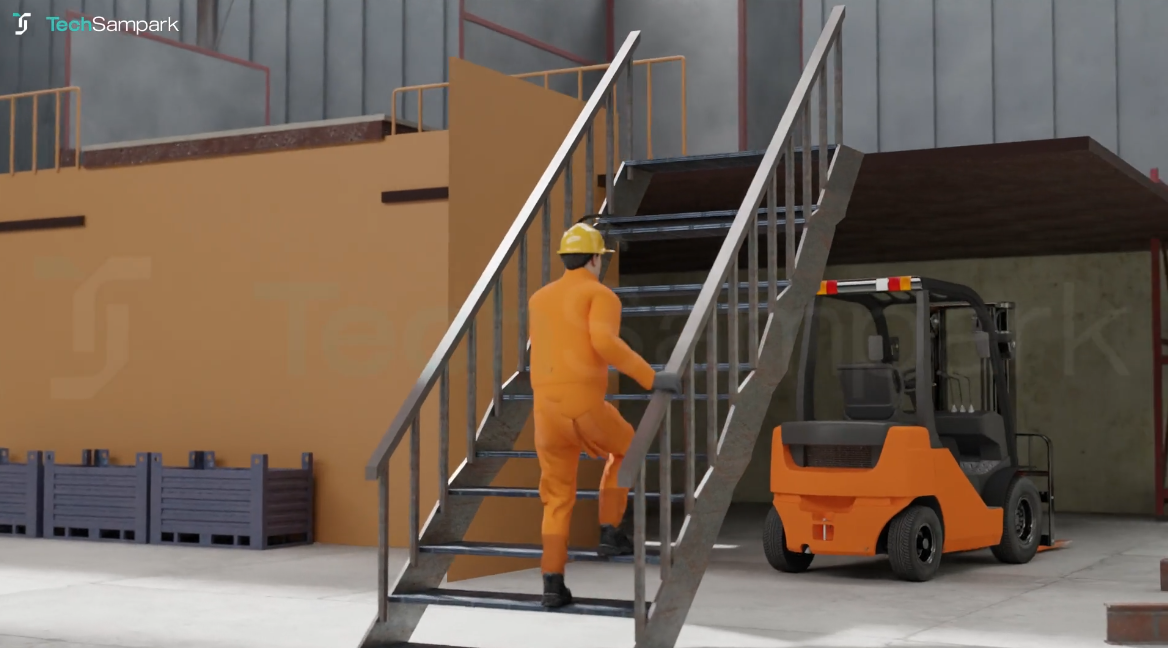
Machine Operation & Lockout/Tagout Procedures Step-by-step animated walkthroughs of machinery operation, shutdown sequences, and lockout/tagout procedures are among the most valuable uses of industrial safety animation. The ability to show internal components, highlight specific control points, and annotate each step in real time makes animated versions significantly more effective than paper instructions or live demonstrations — particularly for complex or high-risk equipment.
Chemical Handling & Hazardous Materials Animated safety videos for chemical handling can show what happens at the molecular level when materials interact incorrectly, visualise the dispersion of hazardous gases in a confined space, and demonstrate correct PPE donning sequences with the kind of detail that live action struggles to capture. For industries handling corrosives, flammables, or toxic materials, this level of visual clarity is not optional — it is a training necessity.
Fire Safety & Emergency Evacuation Emergency procedures need to be understood before they are needed — which means training content has to be memorable enough to recall under stress. Animated fire safety and evacuation videos that accurately represent your facility layout, exit routes, and assembly points give workers a mental map they can activate in an emergency. Generic live action footage of a different building’s evacuation drill does not do this.
Working at Height & Fall Prevention The physics of fall prevention — anchor point load ratings, harness fit, swing fall geometry — are nearly impossible to communicate clearly through live video. Safety video animation can show these forces, distances, and failure points with precision, making the case for correct procedure in a way that sticks.
Electrical Safety & Permit to Work Electrical hazard training is another area where the most important information is invisible. Animation makes the invisible visible — showing arc flash zones, current paths, and isolation sequences in a way that is both accurate and genuinely engaging for the workers who need to understand it.
What to Look for in a Safety Video Animation Studio in India
Industrial safety video animation is a specialist discipline. The consequences of getting it wrong — both from a safety and a regulatory standpoint — are significant. Here is what to look for when evaluating a production partner:
Domain knowledge, not just design skill. A studio that has only ever produced consumer brand animations is not equipped to handle a lockout/tagout procedure or a confined space entry sequence. The team needs to understand industrial environments, safety standards, and the difference between a visually plausible depiction of a process and a technically accurate one.
Willingness to work with your EHS team. The best safety video animation studios treat your health and safety managers as subject matter experts, not as clients to be managed. The script and storyboard review process should include your technical team — not just your marketing or L&D function.
Localisation capability. If your workforce is multilingual, your safety training content needs to be too. A studio that can produce multilingual versions without degrading quality is worth significantly more than one that cannot.
Update flexibility. Processes change. The studio you choose should be able to update animated content efficiently — swapping out a machine model, updating a procedure, or adding a new hazard scenario — without treating it as a full repro project.
The Compliance Argument — And Why It Is Not Enough
Industrial safety video animation often gets sold on compliance. It satisfies training requirements, produces an audit trail, and demonstrates due diligence. All of that is true, and none of it is the real reason to invest in it.
The real reason is that workers who genuinely understand safety procedures — who have internalised the why, not just the what — make better decisions under pressure. And the content that produces that kind of understanding is content that engages, that explains clearly, and that respects the intelligence of the person watching it.
Generic compliance videos do not do that. Well-produced industrial safety animation does.
A Practical Starting Point
If your organisation is evaluating a shift from live action to animated industrial safety videos — or producing safety animation content for the first time — the most useful starting point is usually a single high-priority procedure.
Pick the one that involves the most risk, the highest frequency of near-misses, or the most complex sequence of steps. Build one well-produced animated safety video around it. Measure completion rates, comprehension scores, and incident data before and after. The results tend to make the case for the next video themselves.
Safety training is not a creative exercise. But it is a communication challenge — and like every communication challenge, the quality of the content determines the quality of the outcome.
TechSampark produces industrial safety video animation and technical training content for manufacturing, engineering, pharma, and deep tech organisations across India. Talk to us about your next safety training project.